

Home Author
Author

Mason Alderwood

Advertisement

Kevin O’Leary has spent more than four decades building companies, investing in entrepreneurs and telling people exactly what he thinks about their money.

But one of the most important lessons he says he learned about success has almost nothing to do with investing.

It came from Steve Jobs.

And according to O’Leary, the idea is surprisingly simple:

You only need to accomplish three important things each day.

Everything else?

Noise.

O’Leary Says Most People Are Focusing on the Wrong Things

Modern working life is filled with distractions.

Emails arrive constantly.

Phones vibrate.

Meetings consume hours.

Social media competes for attention.

And people can finish an exhausting day feeling as though they were busy for ten hours without actually accomplishing the things that mattered.

O’Leary believes this is one of the biggest differences between ordinary performers and highly successful founders.

Speaking recently on the Build or Break podcast, the Canadian businessman explained that he tries to identify three genuinely important objectives for each day.

Those come first.

Anything preventing him from completing them is treated as noise.

It sounds almost absurdly simple.

But O’Leary says it took an encounter with one of the most famous entrepreneurs in history for him to understand how powerful the principle could be.

The Lesson Came From Steve Jobs

O’Leary’s connection with Jobs dates back to the 1990s.

At the time, O’Leary was building SoftKey Software Products, which eventually became The Learning Company.

His company was involved in educational software for Apple.

O’Leary recalled suggesting that Jobs listen to students and teachers to understand what they wanted from the software.

Jobs wasn’t particularly interested.

According to O’Leary’s recollection, Jobs believed Apple needed to maintain control over the vision rather than allow outside opinions to dictate what it created.

O’Leary initially found the approach difficult.

Eventually, however, he came to see something underneath it.

Jobs had an extraordinary ability to distinguish between information that mattered and information that did not.

O’Leary Calls It “Signal to Noise”

That distinction became central to the way O’Leary thinks about productivity.

He describes it as the ratio between signal and noise.

Signal is whatever directly contributes to the objective.

Noise is everything competing for attention without meaningfully advancing it.

O’Leary believes Jobs operated at something close to an 80/20 ratio — an unusually intense focus on signal.

That could make Jobs extremely difficult to work with, O’Leary acknowledged.

But he also believes that same characteristic contributed to what Jobs accomplished.

There is an uncomfortable element to that philosophy.

Extreme focus does not necessarily make someone pleasant.

And O’Leary doesn’t pretend otherwise.

He Sees the Same Quality in Elon Musk

O’Leary says he has witnessed a similar mentality in Elon Musk.

He recalled encountering Musk socially at Shark Tank producer Mark Burnett’s Christmas parties.

If Musk decided a conversation was not providing anything useful, according to O’Leary, he could simply leave.

Socially awkward?

Perhaps.

O’Leary sees something else.

He sees someone refusing to spend a limited resource — time — on something he has already decided does not matter.

That distinction reveals quite a lot about O’Leary’s own philosophy.

“I Don’t Care”

O’Leary has accumulated plenty of critics during his career.

His television persona is deliberately confrontational.

His political commentary can be provocative.

His financial advice is frequently delivered without much concern for whether the person hearing it likes the message.

But O’Leary says criticism itself can become another form of noise.

If an opinion does not change his business, investments or objectives, he questions why he should spend energy responding to it.

That does not mean ignoring useful criticism.

It means deciding whether criticism actually contains useful information.

If it doesn’t, O’Leary moves on.

His Career Helps Explain Why He Thinks This Way

O’Leary founded SoftKey in Toronto in 1983.

The business expanded aggressively, eventually becoming The Learning Company before being sold to Mattel in 1999 in a transaction valued at roughly $3.7 billion.

The deal became one of the defining events of O’Leary’s career.

He later moved increasingly into investing and television, eventually becoming one of the best-known personalities on Shark Tank.

That career also included mistakes.

O’Leary readily acknowledges that.

And this is where another part of his philosophy becomes important.

O’Leary Says He Is Not Afraid of Failing

Successful investors frequently appear more certain in retrospect than they actually were when making decisions.

O’Leary rejects that image.

He says he has made plenty of investing mistakes alongside his biggest successes.

What matters, in his view, is ensuring one failure cannot destroy everything else.

His rule is straightforward:

Never bet everything on a single outcome.

That principle sits comfortably alongside his obsession with focus.

Focus intensely on what matters.

But don’t confuse conviction with certainty.

A business can fail.

An investment can collapse.

An entrepreneur can be wrong.

The objective is to survive the mistake.

That Philosophy Is Showing Up in Canada Right Now

O’Leary’s thinking becomes particularly interesting when applied to his recent comments about Canada.

The country is currently dealing with a serious trade confrontation with the United States.

Many investors see uncertainty.

O’Leary sees something potentially more valuable.

He has recently argued that the disruption could create an unusually attractive opportunity to invest in Canadian assets, even describing the potential long-term opportunity as “ridiculously fantastic.”

Again, the principle is similar.

Ignore the noise.

Determine what actually changes the long-term value of an asset.

Then act accordingly.

And Canada Is Trying to Attract Exactly That Kind of Investor

The timing of O’Leary’s argument is particularly interesting.

Prime Minister Mark Carney hosted a major investment summit in Toronto this week, bringing together some of the world’s largest institutional investors.

The government is attempting to attract capital into Canadian mining, energy, infrastructure, technology and data-centre projects as the country tries to reduce its economic dependence on the United States.

More than 160 potential projects representing over C$1 trillion in investment were being presented around the summit.

That overlaps remarkably closely with what O’Leary has been arguing.

Canada has assets.

It has resources.

It has skilled workers.

What it needs is capital willing to look beyond the immediate political uncertainty.

The Difference Between Being Busy and Making Progress

This is ultimately the lesson O’Leary says he learned from Jobs.

Success is not necessarily about doing more.

It is about deciding what deserves attention.

Three meaningful accomplishments can matter more than dozens of emails, meetings and conversations.

The difficult part is identifying those three things.

And then having the discipline to ignore everything attempting to pull you away from them.

Kevin O’Leary’s Rule Is Simple. Following It Isn’t.

There is an obvious danger in O’Leary’s philosophy.

Not everything dismissed as “noise” actually is noise.

Employees can identify problems executives miss.

Customers can reveal weaknesses in products.

Critics can sometimes be right.

Extreme focus becomes dangerous when it turns into an unwillingness to listen.

But that isn’t quite O’Leary’s argument.

His point is about allocation.

Money is finite.

Time is finite.

Attention is finite.

Successful people decide deliberately where each one goes.

And after more than four decades in business, O’Leary says one of the most important lessons he learned came from watching Steve Jobs do exactly that.

Choose the three things that matter today.

Do them first.

Then decide whether everything else deserves your attention at all.

It may sound like a productivity trick.

For Kevin O’Leary, it became something closer to a philosophy for building wealth

Advertisement

Canada has entered one of the strangest economic moments in years.

A new trade confrontation with the United States is threatening exporters. Energy prices remain elevated. Inflation has climbed back to around 3%. Businesses are trying to understand what the latest tariffs will mean.

And two of Canada’s most recognisable economic voices are looking at that uncertainty from completely different directions.

Bank of Canada Governor Tiff Macklem is warning that inflation risks have increased — and that interest rates could ultimately have to rise.

Kevin O’Leary is looking at the same disruption and asking a very different question:

Is this exactly when investors should be buying?

Neither man is saying Canada’s problems are imaginary.

The difference is what they believe those problems mean for what comes next.

Macklem Just Delivered an Important Warning

On September 2, the Bank of Canada announced its latest interest-rate decision.

The central bank left its key policy rate unchanged at 2.25%.

At first glance, that might sound uneventful.

It wasn’t.

The language surrounding the decision changed.

Macklem made clear that the Bank is increasingly concerned about inflation and is prepared to adjust monetary policy if necessary. Reuters reported that policymakers could raise rates multiple times if inflation remains too high.

That represents an important shift in the economic conversation.

For months, Canadians have been asking when borrowing costs might fall further.

Now the question is increasingly becoming whether they could start moving in the opposite direction.

Inflation Is Becoming Uncomfortable Again

The Bank of Canada’s target is 2%.

In July, headline CPI inflation was running at approximately 3%.

Much of that increase came from gasoline prices, which have remained elevated amid conflict in the Middle East.

Strip gasoline out, and inflation was considerably more moderate at 2.2%, while measures of core inflation remained close to 2%.

That distinction matters.

Macklem is not saying Canada has already entered another uncontrolled inflationary spiral.

Instead, he is worried about what could happen next.

If high energy costs persist, they can eventually spread through the economy.

Transportation becomes more expensive.

Manufacturing costs increase.

Businesses pay more to move products.

And eventually some of those costs can reach consumers.

The new tariff confrontation creates another potential source of price pressure.

Then There Are the Tariffs

This is where the situation becomes particularly difficult for the Bank of Canada.

New American tariffs on Canadian exports threaten economic growth.

Canadian counter-tariffs, meanwhile, can increase costs for domestic businesses and consumers.

Normally, weak economic growth might create an argument for lower interest rates.

Higher inflation creates an argument for higher rates.

Canada could potentially face elements of both problems at the same time.

Macklem acknowledged exactly that tension.

“Monetary policy cannot offset the effects of tariffs or influence global energy prices,” he said in his September statement.

What the Bank can do, he argued, is prevent those global shocks from destabilising Canadian prices.

That leaves Macklem walking an extraordinarily narrow path.

Kevin O’Leary Is Looking at the Same Chaos

O’Leary sees the risks.

But his job is very different from Macklem’s.

A central banker must think about inflation, employment and financial stability across the entire economy.

An investor can ask where the disruption is creating opportunities.

And O’Leary believes the current situation may be doing exactly that.

He has described Canada’s tariff turmoil as a potentially “ridiculously fantastic” investment opportunity.

His argument is based on a simple assumption:

The current confrontation between Canada and the United States cannot continue indefinitely.

If he is correct, assets damaged by today’s uncertainty could eventually recover.

And investors who wait until the situation becomes comfortable again may have already missed the most attractive prices.

“Where the Puck Is Going”

O’Leary has explained his thinking with an appropriately Canadian metaphor.

He does not want to invest where the puck is.

He wants to invest where it is going.

For him, today’s headlines are therefore less important than what Canada could look like several years from now.

The country possesses enormous quantities of energy, minerals and other natural resources.

It sits beside the world’s largest economy.

And despite the political confrontation, the Canadian and American economies remain extraordinarily interconnected.

O’Leary’s bet is essentially that economics eventually overwhelms politics.

If relations normalise, he believes investments made during the current disruption could produce substantial returns.

That’s a prediction — not a guarantee.

But it explains why his reaction to the crisis sounds so different from Macklem’s.

The Latest Trade Numbers Show Why Both Could Have a Point

Canada’s July trade figures were released this week.

They were difficult to ignore.

The country’s merchandise trade surplus fell from C$4.2 billion in June to just C$769 million in July.

Exports declined 2.3%.

Imports increased 2.2%.

More importantly, exports to the United States fell 6.6%.

Canada’s merchandise trade surplus with the U.S. consequently dropped by more than 40%.

Those numbers support Macklem’s caution.

Canada remains highly exposed to what happens south of the border.

But they also help explain O’Leary’s investment argument.

Periods of economic uncertainty are precisely when markets can begin repricing companies and assets.

The question is whether that repricing reflects permanent damage — or temporary fear.

Canada Is Not Entering the Crisis From a Position of Collapse

There is another reason the picture is complicated.

The broader Canadian economy had actually begun improving before the latest escalation.

GDP grew 3.3% in the second quarter, following very weak growth in the first.

Consumer spending strengthened.

Housing activity showed some recovery.

Exports and business investment increased.

The unemployment rate edged down to 6.4% in July.

Macklem described this as a broadening recovery.

That is significant.

Canada is not confronting the new tariffs while already deep inside a recession.

But the central bank does not know how durable the rebound will prove if trade tensions persist.

And that uncertainty is precisely where the views of Macklem and O’Leary begin to diverge.

Macklem Has to Protect the Economy. O’Leary Can Bet on It.

This may be the most important difference between the two men.

Macklem cannot simply assume the crisis will disappear.

The Bank of Canada must prepare for the possibility that it doesn’t.

If inflation becomes persistent, the Bank may need to raise interest rates.

If economic activity weakens significantly, policymakers will face a different challenge.

Every decision affects millions of mortgages, businesses and households.

O’Leary has considerably more freedom.

He can accept uncertainty.

In fact, uncertainty can be useful to him.

Investors often make their largest returns precisely when their assessment of the future differs from the market’s.

O’Leary is effectively saying that Canada looks frightening today — but may look considerably better several years from now.

And Macklem Is Not Entirely Pessimistic

There is an interesting detail that gets lost in the dramatic headlines.

Macklem has also acknowledged that Canadian businesses are adapting.

Companies have already spent months dealing with tariffs, new technologies and unusually high uncertainty.

“They’re finding ways to do business,” Macklem said this week.

He argued that this adaptation has left the Canadian economy on stronger footing as it enters the latest wave of American tariffs.

That doesn’t make Macklem an economic optimist in the O’Leary sense.

But it means the two perspectives are not completely incompatible.

O’Leary believes Canadian businesses and assets can eventually emerge from the disruption stronger.

Macklem sees evidence that adaptation is already happening.

Their disagreement is primarily about how much danger exists between here and there.

The Canadian Dollar Adds Another Clue

Financial markets are also attempting to answer that question.

A Reuters poll of 32 foreign-exchange analysts conducted between August 31 and September 2 found expectations that the Canadian dollar could weaken slightly over the next three months before strengthening over the following year.

That forecast depends heavily on the assumption that trade tensions eventually ease.

In other words, professional currency strategists are making a version of the same bet O’Leary is making.

Short-term pain.

Longer-term normalisation.

But there is one major complication.

Markets are also increasingly expecting higher Canadian interest rates.

Investors were pricing in as much as 100 basis points of Bank of Canada tightening through 2027 after Macklem’s latest decision.

That could make the path considerably more painful for borrowers.

For Canadian Households, This Is Not an Abstract Debate

O’Leary and Macklem can talk about investment opportunities, inflation expectations and trade flows.

For ordinary Canadians, the consequences are much more tangible.

Mortgage payments.

Food.

Gasoline.

Jobs.

Business costs.

If Macklem ultimately has to raise rates, borrowers will feel it.

If tariffs persist, businesses and workers in exposed industries will feel it.

If O’Leary is right and the disruption eventually produces a wave of new investment, the benefits would take time to appear.

That is why the next several months matter.

Two Men. One Economy. Two Very Different Jobs.

There is no evidence of a personal confrontation between Kevin O’Leary and Tiff Macklem.

They do not need one for their contrasting perspectives to be interesting.

Macklem looks at Canada’s economy and asks:

What could go wrong, and how do we prevent it from destabilising prices?

O’Leary looks at the same economy and asks:

What is everyone else afraid of — and is that fear creating an opportunity?

Both perspectives can be rational at the same time.

Canada’s economy can face genuine short-term danger while still presenting attractive long-term investment opportunities.

The crucial question is what happens between those two points.

Canada Is Approaching a Decision Point

The next Bank of Canada rate decision is scheduled for October 28.

By then, policymakers will have more information about inflation, tariffs, business activity and the durability of Canada’s recovery.

O’Leary will be watching many of the same numbers.

But he will be looking for something different.

Macklem needs evidence that inflation is under control.

O’Leary wants evidence that today’s fear has created tomorrow’s opportunity.

And that is what makes this moment unusual.

One of Canada’s most important central bankers is preparing for the possibility that money may need to become more expensive.

One of Canada’s most famous investors is preparing for the possibility that Canadian assets may have become unusually attractive.

They are looking at the same country.

The next few months may determine which perspective proves more important.

Advertisement

For decades, Jim Pattison has been one of the most recognisable names in Canadian business.

From automotive dealerships and food distribution to entertainment and media, the Vancouver entrepreneur built an enormous private business empire and became one of Canada’s best-known billionaires.

But in recent weeks, Pattison’s name has appeared in a very different kind of story.

The closure of the Northwood Pulp Mill in Prince George, British Columbia, is leaving roughly 300 people without jobs — and a local politician has publicly called on Pattison to face the affected workers personally.

A Difficult Moment for Prince George

The dispute centres on Canfor’s Northwood Pulp Mill.

For many workers, the closure represents considerably more than the end of another industrial operation. It means the disappearance of jobs that have supported families and contributed to the local economy for years.

Prince George councillor Brian Skakun, himself a former Canfor employee, made his feelings clear during a July 28 news conference.

He called on Pattison to personally hand final paycheques to approximately 300 employees losing their jobs.

The request was symbolic, but its message was unmistakable.

Skakun argued that senior business figures should see firsthand what major corporate decisions mean for the people affected by them.

Why Jim Pattison Entered the Conversation

Pattison’s connection comes through the corporate structure surrounding Canfor.

The Jim Pattison Group has extensive Canadian business interests, while Pattison himself has spent more than six decades building one of the country’s largest privately held business groups.

Even at an age when most executives would have retired decades earlier, Pattison has remained closely associated with the company carrying his name.

The Jim Pattison Group’s own website continues to describe an organisation pursuing growth and future acquisitions.

That enormous business profile inevitably means Pattison’s name attracts attention when major employment decisions affect communities.

And this is not the first time in 2026 that one of his companies has faced intense public scrutiny.

Earlier This Year, Another Controversy Ended With a Reversal

In January, a company owned by Pattison was preparing to sell a large industrial property in Virginia.

The proposed buyer was the US Department of Homeland Security, and the approximately 550,000-square-foot warehouse was expected to be converted for use by Immigration and Customs Enforcement.

The proposal quickly became controversial in Canada.

Jim Pattison Developments said it had not initially known the intended use of the property.

After the backlash intensified, the company announced that the transaction would not proceed.

It was a rare example of a business transaction involving the Pattison empire becoming an international political story.

But 2026 Has Also Brought a Very Different Pattison Story

Only months later, his name was attached to one of British Columbia’s most significant new health-care facilities.

The Jim Pattison Acute Care Tower at Royal Columbian Hospital opened its first major services to patients on May 31.

The 10-storey facility includes 388 beds, a substantially expanded emergency department, intensive care facilities and specialised cardiac services. Further maternity, neonatal and surgical services are scheduled to open later in 2026.

The building bears Pattison’s name because of a $30 million donation to the project.

On its opening day, more than 200 existing hospital patients were moved into the new tower, in what Fraser Health described as one of the largest patient transfers in British Columbia’s history.

The contrast between the stories is striking.

On one side is a major philanthropic project intended to expand medical care for thousands of people.

On the other is an industrial closure leaving hundreds of workers facing an uncertain future.

That Contrast Explains the Attention Around Pattison

Jim Pattison has occupied an unusual position in Canadian public life for decades.

He is not a politician, yet the scale of his companies means decisions connected with his business interests can have consequences for entire communities.

That makes the current situation in Prince George particularly sensitive.

For the workers losing their jobs, corporate strategy is not an abstract discussion about balance sheets or long-term competitiveness.

It determines what happens to their families next.

And that is precisely the point Skakun attempted to make by publicly asking Pattison to meet them.

A Business Legacy Still Being Written

At 97, Jim Pattison has already had a business career spanning more than six decades.

The company he founded in 1961 expanded far beyond its beginnings in the automobile business and today operates across numerous industries.

Yet 2026 demonstrates how difficult it is to reduce such a career to a single narrative.

Within the same year, Pattison’s name has been connected to a controversial US property transaction that was ultimately abandoned, the opening of a major hospital tower bearing his name, and now a painful industrial closure affecting hundreds of Canadian workers.

For Prince George, however, the immediate issue is much simpler.

Hundreds of workers are preparing to leave Northwood for the final time.

And one local councillor wants one of Canada’s most famous businessmen to be there when they do.

Advertisement

For many decades, the name Jim Pattison has been associated with one of Canada’s largest private businesses. Consequently, every public appearance he makes invariably attracts interest not only from entrepreneurs but also from those who closely follow the state of the country’s economy.

During one of his recent business events, the businessman once again shared his views on corporate development, long-term investment and the changes currently taking place in the Canadian economy.

It was these comments that sparked a new wave of discussion.

The Conversation Was Not Just About Business

Although the main focus was on issues relating to the management of large companies, Jim Pattison touched on topics several times that are of concern to a much wider audience today.

He noted that the economic situation requires greater flexibility from businesses, and that the ability to adapt quickly is becoming one of the key factors for long-term success.

According to him, it is consistent decision-making that helps companies maintain stability during periods of uncertainty.

Why His Words Resounded So Strongly

The public has long been accustomed to the fact that Jim Pattison rarely makes bold statements.

That is precisely why every public appearance he makes attracts the attention of business publications and economic commentators.

Following the first reports, many began discussing not individual quotes, but the entrepreneur’s overall view of the development of the Canadian economy and the future of large companies.

The Long-Term Outlook Became the Main Theme

During his speech, Pattison repeatedly emphasised the importance of strategic planning.

In his view, short-term market fluctuations should not distract companies from their long-term goals.

It is precisely this approach, according to many analysts, that remains one of the reasons for the stable growth of his business group over many decades.

Why Interest in the Story Endures

Economic issues continue to be one of the most hotly debated topics in Canada.

Consequently, any comments made by prominent business figures inevitably become part of a wider public debate.

For some, Jim Pattison’s speech provided an opportunity to hear the views of one of the country’s most experienced entrepreneurs.

For others, it was a chance to reflect once again on the qualities that help companies thrive in a rapidly changing economy.

What Commentators Are Saying

According to business journalists, such public statements provide a better understanding of how Canada’s largest companies assess the current economic situation.

Although Jim Pattison did not make any sensational statements, his assessments once again captured the audience’s attention and became part of the discussion on the future of Canadian business.

This is precisely why interest in his latest comments continues even after the event has ended.

Advertisement

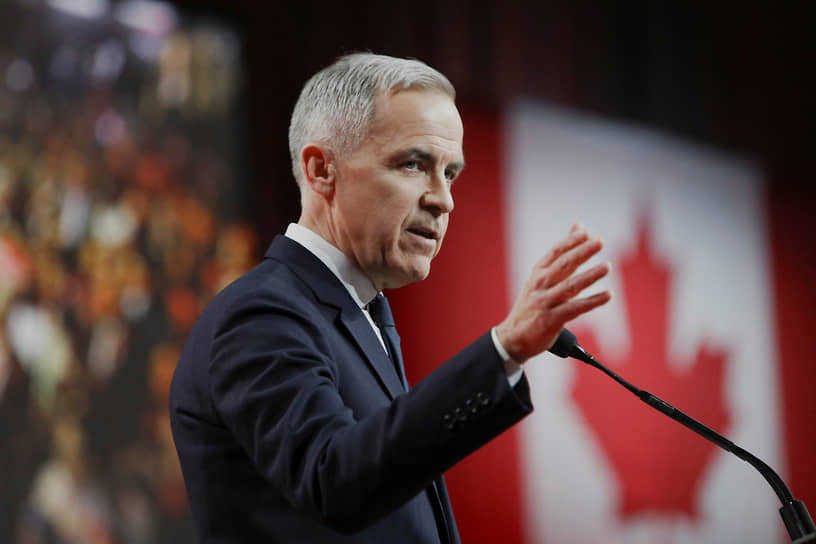
Canadian Prime Minister Mark Carney has once again found himself at the center of a political debate following a tense exchange with reporters at a press conference, where he was asked questions about his financial assets and potential conflicts of interest.

What began as a routine discussion of ethical procedures quickly turned into one of the most talked-about political topics of the day in Canada.

Why the issue suddenly gained traction

Last week, Mark Carney confirmed that he had transferred his financial assets into a blind trust—a mechanism designed to prevent potential conflicts of interest.

Under current Canadian rules, the prime minister is required to disclose his assets to the ethics commissioner by a set deadline, and public disclosure follows later in accordance with the procedure.

However, opposition politicians argued that, given the high public interest in the matter, Carney could have voluntarily disclosed more information earlier.

This very issue became the central topic of the press conference.

A tense moment at the press conference

When journalists asked the prime minister directly whether he should disclose details of his financial assets in advance, Carney made it clear that he fully complies with current regulations.

He emphasized that he is following all procedures required by law and sees no reason to create special requirements tailored specifically to his situation.

But it was his sharp reaction to repeated questions that drew particular attention.

Carney stated that such questions are based on assumptions of dishonesty, and made it clear that he does not intend to go beyond the existing ethical guidelines simply because of political pressure.

This moment quickly became a hot topic of discussion in the Canadian media and on social media.

Why the debate continues

Additional interest was sparked by the fact that, before entering politics, Carney held positions in major international financial institutions and on corporate boards of directors.

Public documents had previously indicated that he held significant financial interests linked to big business.

Although transferring assets to a blind trust complies with current requirements, critics argue that the issue of public trust requires greater transparency.

Carney’s supporters, on the other hand, note that the prime minister is following all official procedures, and that his opponents’ demands are politically motivated.

What This Means for Carney

Political analysts note that the issues of ethics and transparency are particularly sensitive for the Canadian public.

Even if there are no formal violations, the public reaction to such incidents can significantly influence perceptions of a leader.

In the coming weeks, pressure on this issue is likely to continue—especially if the opposition continues to make transparency a key element of its political attacks.

While Mark Carney insists that he is acting strictly by the book, the public debate surrounding his financial interests is only gaining momentum.

Mark Carney’s latest statement has sparked a flurry of questions in Canada

Canadian Prime Minister Mark Carney has once again found himself at the center of a political debate following a tense exchange with reporters at a press conference, where he was asked questions about his financial assets and potential conflicts of interest.

What began as a routine discussion of ethical procedures quickly turned into one of the most talked-about political topics of the day in Canada.

Why the issue suddenly gained traction

Last week, Mark Carney confirmed that he had transferred his financial assets into a blind trust—a mechanism designed to prevent potential conflicts of interest.

Under current Canadian rules, the prime minister is required to disclose his assets to the ethics commissioner by a set deadline, and public disclosure follows later in accordance with the procedure.

However, opposition politicians argued that, given the high public interest in the matter, Carney could have voluntarily disclosed more information earlier.

This very issue became the central topic of the press conference.

A tense moment at the press conference

When journalists asked the prime minister directly whether he should disclose details of his financial assets in advance, Carney made it clear that he fully complies with current regulations.

He emphasized that he is following all procedures required by law and sees no reason to create special requirements tailored specifically to his situation.

But it was his sharp reaction to repeated questions that drew particular attention.

Carney stated that such questions are based on assumptions of dishonesty, and made it clear that he does not intend to go beyond the existing ethical guidelines simply because of political pressure.

This moment quickly became a hot topic of discussion in the Canadian media and on social media.

Why the debate continues

Additional interest was sparked by the fact that, before entering politics, Carney held positions in major international financial institutions and on corporate boards of directors.

Public documents had previously indicated that he held significant financial interests linked to big business.

Although transferring assets to a blind trust complies with current requirements, critics argue that the issue of public trust requires greater transparency.

Carney’s supporters, on the other hand, note that the prime minister is following all official procedures, and that his opponents’ demands are politically motivated.

What This Means for Carney

Political analysts note that the issues of ethics and transparency are particularly sensitive for the Canadian public.

Even if there are no formal violations, the public reaction to such incidents can significantly influence perceptions of a leader.

In the coming weeks, pressure on this issue is likely to continue—especially if the opposition continues to make transparency a key element of its political attacks.

While Mark Carney insists that he is acting strictly by the book, the public debate surrounding his financial interests is only gaining momentum.

Advertisement

Tensions between the federal government and several provincial administrations have reached a new peak over the implementation and scheduled escalation of the federal carbon pricing backstop, reigniting a fundamental debate about economic competitiveness, provincial jurisdiction, and the pace of Canada’s environmental transition. As the carbon price is set to increase according to its legislated schedule, leaders in resource-rich provinces, particularly Alberta, Saskatchewan, and Ontario, have intensified their political and legal resistance, arguing that the policy is economically damaging and constitutionally overreaching. This escalating friction highlights the persistent challenges of crafting and enforcing national environmental policy in a federation with deeply diverse regional economies.

The federal government has remained steadfast in its defense of the carbon pricing mechanism, maintaining that it is the most economically efficient and transparent tool available to reduce greenhouse gas emissions and drive innovation in the clean technology sector. Federal officials consistently point to the revenue-neutral design of the policy, emphasizing that the majority of the funds collected are returned directly to households in the form of the Canada Carbon Rebate. The government argues that this structure ensures that the policy is progressive, protecting low- and middle-income families from financial hardship while still providing a clear market signal to reduce consumption and invest in energy efficiency. Furthermore, Ottawa contends that honoring the scheduled price increases is essential for maintaining credibility with international partners and meeting Canada’s binding commitments under the Paris Agreement.

Provincial leaders, however, vehemently reject the federal narrative, presenting a starkly different assessment of the policy’s impact. They argue that the carbon tax acts as a broad-based levy on everything from heating homes and commuting to work to producing and transporting food, thereby exacerbating the cost-of-living crisis for their residents. Beyond the consumer impact, provincial governments and industry associations warn that the escalating carbon price severely undermines the global competitiveness of energy-intensive, trade-exposed industries, such as manufacturing, agriculture, and oil and gas. Provincial premiers argue that this economic pressure leads to capital flight, job losses, and reduced provincial tax revenues, ultimately harming the very communities the federal government claims to protect.

Pages: 1 2

Advertisement

The Canadian economy has demonstrated robust resilience and steady growth in the first quarter of 2026, according to the highly anticipated Spring Economic Update released today by the Department of Finance. Defying earlier global pessimism, Canada’s economic indicators paint a picture of a nation successfully navigating international headwinds through strategic policy, diversified industries, and a dynamic labor market.

The report highlights a solidified GDP growth rate of 2.1 percent for the quarter, outperforming several major G7 counterparts. This growth has been broadly based, driven by strong domestic consumption, a resurgence in business investment, and a notable expansion in the export sector. The Finance Minister noted that this performance is a direct result of the government’s targeted fiscal policies, which have successfully stimulated productivity without reigniting inflationary pressures.

“Today’s numbers confirm what Canadians are feeling on the ground: our economy is strong, adaptable, and moving in the right direction,” the Finance Minister stated during the briefing in Ottawa. “By investing in our people, our infrastructure, and our innovation sectors, we have built an economy that can withstand global shocks and deliver tangible benefits to families across the country.”

A standout feature of the Spring Update is the exceptional strength of the labor market. The economy added 45,000 net new jobs in the first quarter, pushing the national employment rate to a record high for this time of year. Wage growth has remained steady at 3.5 percent, outpacing the current inflation rate and resulting in a genuine increase in real purchasing power for Canadian workers. This rise in household income has been a primary catalyst for the sustained strength in retail sales and the service sector.

Pages: 1 2

Advertisement

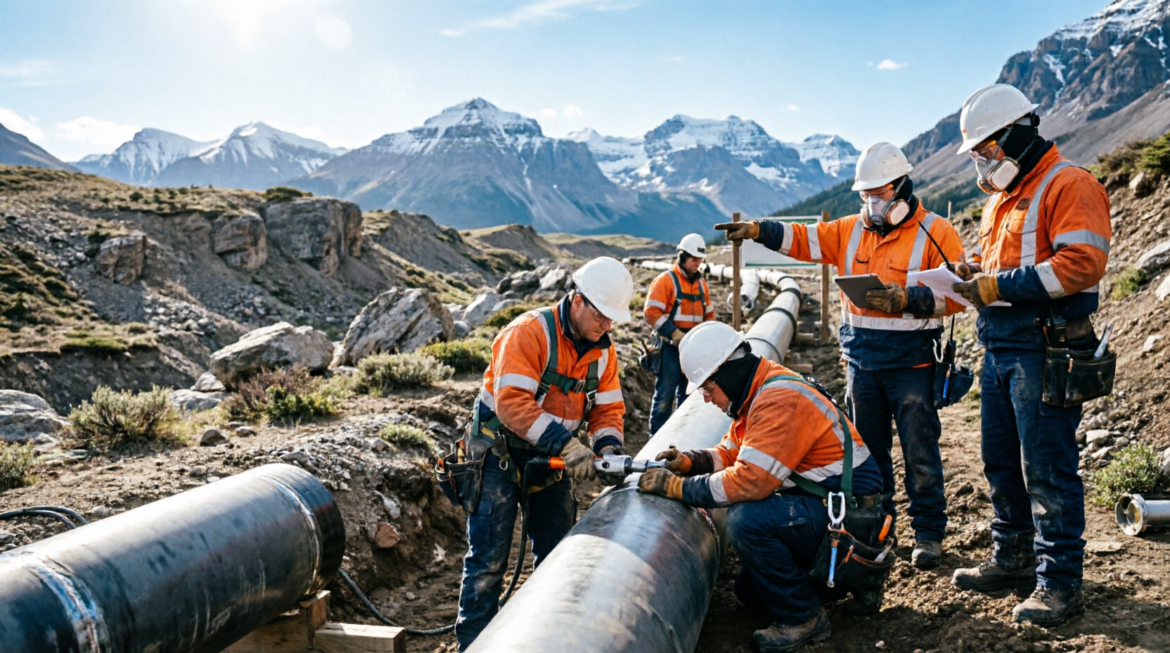
In a landmark demonstration of collaborative federalism, the federal government and the Province of Alberta have reached a comprehensive agreement to advance the modernized West Coast Pipeline Project. Announced jointly by Prime Minister Mark Carney and the Premier of Alberta, the initiative represents a new paradigm in Canadian energy development, balancing economic growth, energy security, and stringent environmental stewardship.

The agreement, finalized after months of constructive dialogue, ensures that the pipeline expansion will proceed with unprecedented levels of environmental protection and Indigenous participation. Unlike legacy energy projects, this iteration of the West Coast Pipeline is designed as a “next-generation” infrastructure asset. It incorporates state-of-the-art leak detection systems, double-walled piping in ecologically sensitive areas, and a mandatory integration of carbon capture and storage (CCS) technologies at key pumping facilities.

“Canada can be both an energy powerhouse and a global leader in climate action,” Prime Minister Carney stated during the joint press conference in Calgary. “This partnership with Alberta proves that we do not have to choose between economic prosperity and environmental responsibility. By working together, we are building an energy corridor that meets the highest standards of the 21st century.”

A cornerstone of the agreement is the formalization of Indigenous equity partnerships. Several First Nations and Métis communities along the proposed route have secured significant ownership stakes in the project. This model ensures that Indigenous communities are not merely consulted, but are active financial beneficiaries and decision-makers in the project’s lifecycle. This inclusive approach has been widely praised by Indigenous leadership organizations as a blueprint for future resource development in Canada.

Pages: 1 2

Advertisement

Canada’s ambitious Defence Industrial Strategy, introduced by Prime Minister Mark Carney’s government last year, is yielding remarkable economic dividends. According to a comprehensive new report released by the Ministry of Innovation, Science and Industry, the strategy has directly facilitated the creation of 125,000 new jobs across the country. This milestone effectively transforms the defence sector from a specialized niche into a primary engine of national economic growth and technological innovation.

The strategy, internally codenamed “Shield and Engine,” was designed with a dual mandate: to fortify national and continental security, and to catalyze advanced domestic manufacturing. Rather than relying predominantly on foreign procurement, Canada has strategically pivoted toward building sovereign industrial capacity. This shift has necessitated substantial investments in research and development (R&D), the modernization of manufacturing facilities, and the aggressive upskilling of the domestic workforce.

The most significant employment growth has been observed in Ontario, Quebec, and British Columbia, regions that already host established aerospace and advanced electronics clusters. However, the strategy intentionally includes provisions to stimulate economic activity in Atlantic Canada and the Prairie provinces. New regional hubs dedicated to the production of specialized components, maritime technologies, and unmanned aerial systems have successfully diversified the local economic base in these areas.

“These 125,000 jobs represent far more than statistical growth; they are engineers, software developers, skilled tradespeople, and technicians who are actively building Canada’s future,” stated Minister of Defence Bill Blair. “We are demonstrating to the world that national security and economic prosperity are mutually reinforcing. By investing in our defence industrial base, we are simultaneously investing in our technological sovereignty and our workforce’s capabilities.”

Pages: 1 2

Advertisement

Prime Minister Mark Carney officially unveiled a transformative $2 billion federal investment package today, aimed at modernizing and expanding critical infrastructure across Canada’s provinces and territories. Dubbed the “Foundation for Growth” initiative, the program represents a strategic commitment to resolving longstanding regional challenges in transportation, clean water access, and digital connectivity, while simultaneously stimulating local economies and generating thousands of jobs.

Speaking to an audience of municipal leaders, Indigenous representatives, and business stakeholders in Toronto, Prime Minister Carney framed infrastructure not merely as concrete and steel, but as the vital circulatory system of the national economy. “For Canada to maintain its competitive edge in the 21st century, we must ensure that every city, town, and rural community has access to modern, reliable, and sustainable infrastructure,” Carney declared. “This investment is about connecting people to opportunities and building a resilient foundation for future generations.”

The $2 billion fund will be distributed among all ten provinces and three territories using a needs-based formula that accounts for population density, geographic challenges, and specific regional deficits. A significant portion of the funding is earmarked for the rehabilitation and expansion of rural highway networks, addressing logistical bottlenecks that have historically hindered local agricultural and manufacturing businesses from reaching broader markets. Additionally, substantial investments will target the upgrading of water treatment and wastewater systems, with a dedicated focus on eliminating long-term drinking water advisories in Indigenous communities.

A cornerstone of the “Foundation for Growth” initiative is its emphasis on green infrastructure. Approximately 30 percent of the total funding is allocated to projects that actively reduce the national carbon footprint. This includes the deployment of electric vehicle (EV) charging networks along major interprovincial corridors, the modernization of public transit fleets with zero-emission technologies, and the retrofitting of public buildings to achieve higher energy efficiency standards. This approach ensures that economic development proceeds in lockstep with Canada’s ambitious climate objectives.

Minister of Infrastructure and Communities, Sean Fraser, noted that the initiative has already garnered strong bipartisan support from provincial premiers. “We have listened to the concerns of mayors and regional leaders across the country. They do not just want federal funding; they want genuine partnership. This program provides them with the flexibility to prioritize local needs while adhering to rigorous national standards of quality, transparency, and environmental stewardship,” Fraser explained.

Pages: 1 2

Advertisement

Newer Posts

Our Company

Company name: Dusk Puma Ltd. 

Official address: 50 Bloor St E, Toronto, ON M4W 3L8, Canada

Phone: +14169782566

E-mail:  info@dusk-puma.com 

Disclaimer

The content on this website is for informational purposes only and does not constitute professional, legal, or financial advice. While we strive for accuracy, news and data may change rapidly; please verify critical information with official sources. Views expressed in opinion pieces belong solely to their authors. This site is not affiliated with any government entity.

© 2026 – All rights reserved