

Home Economy
Category:

Economy

Advertisement

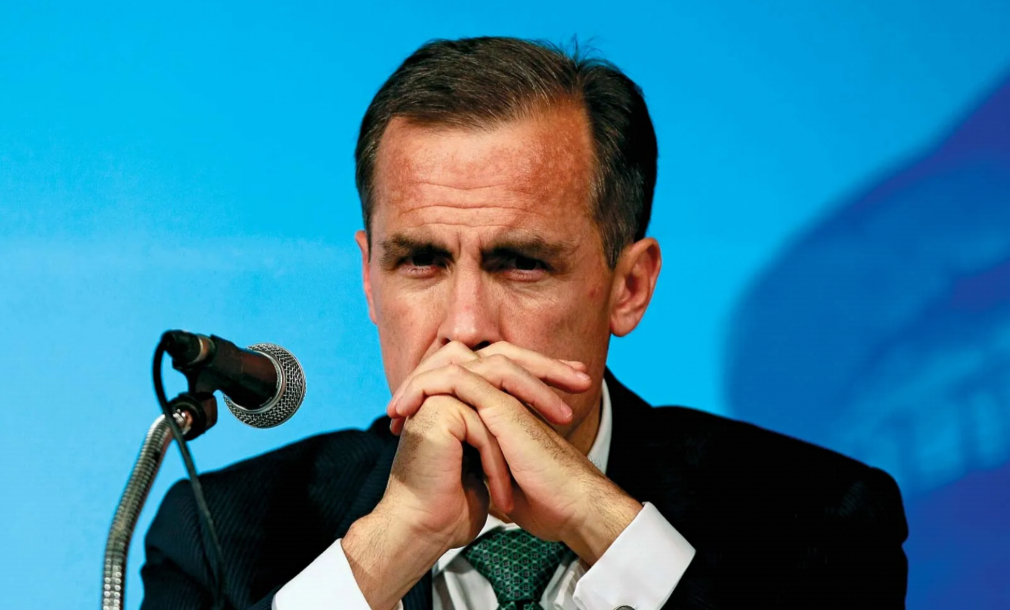
Canadian Prime Minister Mark Carney has once again found himself at the center of a political debate following a tense exchange with reporters at a press conference, where he was asked questions about his financial assets and potential conflicts of interest.

What began as a routine discussion of ethical procedures quickly turned into one of the most talked-about political topics of the day in Canada.

Why the issue suddenly gained traction

Last week, Mark Carney confirmed that he had transferred his financial assets into a blind trust—a mechanism designed to prevent potential conflicts of interest.

Under current Canadian rules, the prime minister is required to disclose his assets to the ethics commissioner by a set deadline, and public disclosure follows later in accordance with the procedure.

However, opposition politicians argued that, given the high public interest in the matter, Carney could have voluntarily disclosed more information earlier.

This very issue became the central topic of the press conference.

A tense moment at the press conference

When journalists asked the prime minister directly whether he should disclose details of his financial assets in advance, Carney made it clear that he fully complies with current regulations.

He emphasized that he is following all procedures required by law and sees no reason to create special requirements tailored specifically to his situation.

But it was his sharp reaction to repeated questions that drew particular attention.

Carney stated that such questions are based on assumptions of dishonesty, and made it clear that he does not intend to go beyond the existing ethical guidelines simply because of political pressure.

This moment quickly became a hot topic of discussion in the Canadian media and on social media.

Why the debate continues

Additional interest was sparked by the fact that, before entering politics, Carney held positions in major international financial institutions and on corporate boards of directors.

Public documents had previously indicated that he held significant financial interests linked to big business.

Although transferring assets to a blind trust complies with current requirements, critics argue that the issue of public trust requires greater transparency.

Carney’s supporters, on the other hand, note that the prime minister is following all official procedures, and that his opponents’ demands are politically motivated.

What This Means for Carney

Political analysts note that the issues of ethics and transparency are particularly sensitive for the Canadian public.

Even if there are no formal violations, the public reaction to such incidents can significantly influence perceptions of a leader.

In the coming weeks, pressure on this issue is likely to continue—especially if the opposition continues to make transparency a key element of its political attacks.

While Mark Carney insists that he is acting strictly by the book, the public debate surrounding his financial interests is only gaining momentum.

Mark Carney’s latest statement has sparked a flurry of questions in Canada

Canadian Prime Minister Mark Carney has once again found himself at the center of a political debate following a tense exchange with reporters at a press conference, where he was asked questions about his financial assets and potential conflicts of interest.

What began as a routine discussion of ethical procedures quickly turned into one of the most talked-about political topics of the day in Canada.

Why the issue suddenly gained traction

Last week, Mark Carney confirmed that he had transferred his financial assets into a blind trust—a mechanism designed to prevent potential conflicts of interest.

Under current Canadian rules, the prime minister is required to disclose his assets to the ethics commissioner by a set deadline, and public disclosure follows later in accordance with the procedure.

However, opposition politicians argued that, given the high public interest in the matter, Carney could have voluntarily disclosed more information earlier.

This very issue became the central topic of the press conference.

A tense moment at the press conference

When journalists asked the prime minister directly whether he should disclose details of his financial assets in advance, Carney made it clear that he fully complies with current regulations.

He emphasized that he is following all procedures required by law and sees no reason to create special requirements tailored specifically to his situation.

But it was his sharp reaction to repeated questions that drew particular attention.

Carney stated that such questions are based on assumptions of dishonesty, and made it clear that he does not intend to go beyond the existing ethical guidelines simply because of political pressure.

This moment quickly became a hot topic of discussion in the Canadian media and on social media.

Why the debate continues

Additional interest was sparked by the fact that, before entering politics, Carney held positions in major international financial institutions and on corporate boards of directors.

Public documents had previously indicated that he held significant financial interests linked to big business.

Although transferring assets to a blind trust complies with current requirements, critics argue that the issue of public trust requires greater transparency.

Carney’s supporters, on the other hand, note that the prime minister is following all official procedures, and that his opponents’ demands are politically motivated.

What This Means for Carney

Political analysts note that the issues of ethics and transparency are particularly sensitive for the Canadian public.

Even if there are no formal violations, the public reaction to such incidents can significantly influence perceptions of a leader.

In the coming weeks, pressure on this issue is likely to continue—especially if the opposition continues to make transparency a key element of its political attacks.

While Mark Carney insists that he is acting strictly by the book, the public debate surrounding his financial interests is only gaining momentum.

Advertisement

Tensions between the federal government and several provincial administrations have reached a new peak over the implementation and scheduled escalation of the federal carbon pricing backstop, reigniting a fundamental debate about economic competitiveness, provincial jurisdiction, and the pace of Canada’s environmental transition. As the carbon price is set to increase according to its legislated schedule, leaders in resource-rich provinces, particularly Alberta, Saskatchewan, and Ontario, have intensified their political and legal resistance, arguing that the policy is economically damaging and constitutionally overreaching. This escalating friction highlights the persistent challenges of crafting and enforcing national environmental policy in a federation with deeply diverse regional economies.

The federal government has remained steadfast in its defense of the carbon pricing mechanism, maintaining that it is the most economically efficient and transparent tool available to reduce greenhouse gas emissions and drive innovation in the clean technology sector. Federal officials consistently point to the revenue-neutral design of the policy, emphasizing that the majority of the funds collected are returned directly to households in the form of the Canada Carbon Rebate. The government argues that this structure ensures that the policy is progressive, protecting low- and middle-income families from financial hardship while still providing a clear market signal to reduce consumption and invest in energy efficiency. Furthermore, Ottawa contends that honoring the scheduled price increases is essential for maintaining credibility with international partners and meeting Canada’s binding commitments under the Paris Agreement.

Provincial leaders, however, vehemently reject the federal narrative, presenting a starkly different assessment of the policy’s impact. They argue that the carbon tax acts as a broad-based levy on everything from heating homes and commuting to work to producing and transporting food, thereby exacerbating the cost-of-living crisis for their residents. Beyond the consumer impact, provincial governments and industry associations warn that the escalating carbon price severely undermines the global competitiveness of energy-intensive, trade-exposed industries, such as manufacturing, agriculture, and oil and gas. Provincial premiers argue that this economic pressure leads to capital flight, job losses, and reduced provincial tax revenues, ultimately harming the very communities the federal government claims to protect.

Pages: 1 2

Advertisement

Canada’s annual inflation rate has dropped to 2.8 percent, marking a significant milestone in the battle against rising prices, driven largely by a decline in energy costs and a moderation in goods prices. According to the latest Consumer Price Index (CPI) data released by Statistics Canada, the overall cooling of inflation brings the headline rate closer to the Bank of Canada’s two percent target. However, the political implications of this economic data are complex, as the debate over the federal carbon tax continues to dominate the national discourse.

The drop in the headline inflation rate is a welcome relief for consumers who have been battered by high costs over the past two years. The decline in gasoline prices, coupled with softer prices for durable goods, has been the primary driver of the cooling trend. “We are seeing broad-based moderation in inflation,” noted a senior economist at a major Canadian bank. “The supply chain disruptions have eased, and energy prices have normalized, which is pulling the overall index down.”

Despite the positive headline number, core inflation measures, which strip out volatile components like energy, remain slightly elevated, indicating that underlying price pressures in the services sector are still present. This nuance is critical for the Bank of Canada’s monetary policy but has become a central point of contention in the political arena.

The release of the CPI data has immediately been weaponized in the ongoing political battle over the federal carbon pricing system. Conservative Leader Pierre Poilievre has consistently argued that the carbon tax is a primary driver of inflation, increasing the cost of food, fuel, and housing. Following the release of the 2.8 percent inflation figure, Poilievre reiterated his call to “axe the tax,” arguing that any inflation relief is happening in spite of the carbon tax, not because of it. “The carbon tax is a tax on everything,” Poilievre told supporters at a rally. “If we remove it, prices will drop further, and families will keep more of their hard-earned money.”

Pages: 1 2

Advertisement

Canada’s economic growth has significantly slowed, with recent data from Statistics Canada revealing that the country’s Gross Domestic Product (GDP) barely expanded in the last quarter, and per-capita GDP continuing its downward trend. This economic stagnation is occurring against a backdrop of escalating global trade tensions, prompting urgent political discussions about the future of Canada’s trade strategy and its industrial competitiveness.

The StatCan report highlights a stark reality: while the overall economy is avoiding a technical recession, the benefits of growth are not being shared among the population. Per-capita GDP, a crucial measure of individual living standards, has declined for several consecutive quarters. This metric has become a potent political weapon for the opposition, who argue that the current government’s policies are making Canadians poorer on an individual basis, even if the overall economic pie is slightly larger due to population growth.

The slowdown is partly attributed to a challenging global trade environment. Ongoing disputes over softwood lumber, coupled with increasing protectionist tendencies in the United States and shifting trade dynamics with China, have created headwinds for Canadian exporters. The federal government has been actively trying to diversify trade relationships, but progress has been slow, leaving the economy vulnerable to external shocks.

Trade Minister Mary Ng has been tasked with navigating this complex landscape, emphasizing the need to strengthen ties with Indo-Pacific nations and reinforce the Canada-United States-Mexico Agreement (CUSMA). “We are in a highly competitive global environment,” Ng stated during a recent trade conference in Vancouver. “Our focus is on ensuring that Canadian businesses have the support they need to access new markets and integrate into global supply chains, particularly in critical minerals and clean technology.”

Pages: 1 2

Advertisement

The federal government has unveiled its 2026 budget, a fiscal blueprint that explicitly pivots away from broad-based social spending toward targeted investments in artificial intelligence, clean energy infrastructure, and housing supply. Presented by Finance Minister Chrystia Freeland on Parliament Hill, the document acknowledges that Canada’s productivity gap with the United States remains a critical vulnerability. With global trade tensions persisting and domestic growth sluggish, the government is betting that strategic public investment can catalyze private sector innovation without reigniting inflation or ballooning the deficit.

The centerpiece of Budget 2026 is the establishment of a $15 billion “AI and Advanced Manufacturing Fund,” designed to attract global tech giants and retain Canadian talent through direct subsidies and accelerated capital cost allowances for AI-related hardware and data centers. Simultaneously, the government has introduced stricter tax compliance measures targeting multinational corporations and high-net-worth individuals, aiming to recover an estimated $4 billion annually in unpaid taxes. Freeland framed these moves as essential for long-term competitiveness. “We are not here to manage decline,” she told the House of Commons. “We are here to build the industries of tomorrow, funded responsibly by ensuring everyone pays their fair share today.”

The political reaction was immediate and sharply divided. The governing Liberals positioned the budget as a pragmatic, forward-looking plan that balances innovation with fiscal responsibility. They argued that the era of pandemic-era deficits is over, replaced by disciplined spending that rewards productivity rather than consumption. This narrative is central to their re-election strategy, as they seek to distance themselves from past criticisms of overspending while still appealing to progressive voters concerned about inequality.

Conservative Leader Pierre Poilievre seized on the corporate tax increases as proof that the government remains hostile to business. “This budget is a tax hike disguised as innovation policy,” he declared during his response in the Commons. He reiterated his party’s alternative vision: deregulation, energy sector expansion, and immigration reduction as the true drivers of growth. Poilievre argued that raising taxes on businesses during a period of slow growth will only drive investment south of the border, worsening Canada’s productivity crisis. His message resonated strongly with small business owners and rural voters who feel alienated by Ottawa’s economic agenda.

Pages: 1 2

Advertisement

The Bank of Canada has announced its decision to maintain its benchmark overnight interest rate at 4.75 percent, signaling a cautious approach as policymakers weigh persistent domestic inflation against slowing economic growth and mounting global uncertainties. The decision, widely anticipated by financial markets, comes at a critical juncture for the Canadian economy and carries significant political implications as the country approaches a highly contested federal election.

In his accompanying statement, Bank of Canada Governor Tiff Macklem emphasized that while inflation has moderated considerably from its peak, core measures of inflation remain stubbornly elevated. “While we have made progress, the job is not yet done,” Macklem stated during his press conference in Ottawa. “Maintaining the current policy rate ensures that we remain committed to our two percent inflation target, preventing any premature easing that could re-ignite price pressures.”

The central bank’s decision has immediately become a focal point in the national political discourse. Finance Minister Chrystia Freeland released a brief statement shortly after the announcement, reaffirming the government’s respect for the Bank of Canada’s operational independence. “Our government remains focused on responsible fiscal management and growing the economy, while the Bank of Canada manages monetary policy to keep inflation in check,” Freeland noted, carefully navigating the political sensitivity of commenting on interest rates.

Pages: 1 2

Advertisement

Our Company

Company name: Dusk Puma Ltd. 

Official address: 50 Bloor St E, Toronto, ON M4W 3L8, Canada

Phone: +14169782566

E-mail:  info@dusk-puma.com 

Disclaimer

The content on this website is for informational purposes only and does not constitute professional, legal, or financial advice. While we strive for accuracy, news and data may change rapidly; please verify critical information with official sources. Views expressed in opinion pieces belong solely to their authors. This site is not affiliated with any government entity.

© 2026 – All rights reserved