

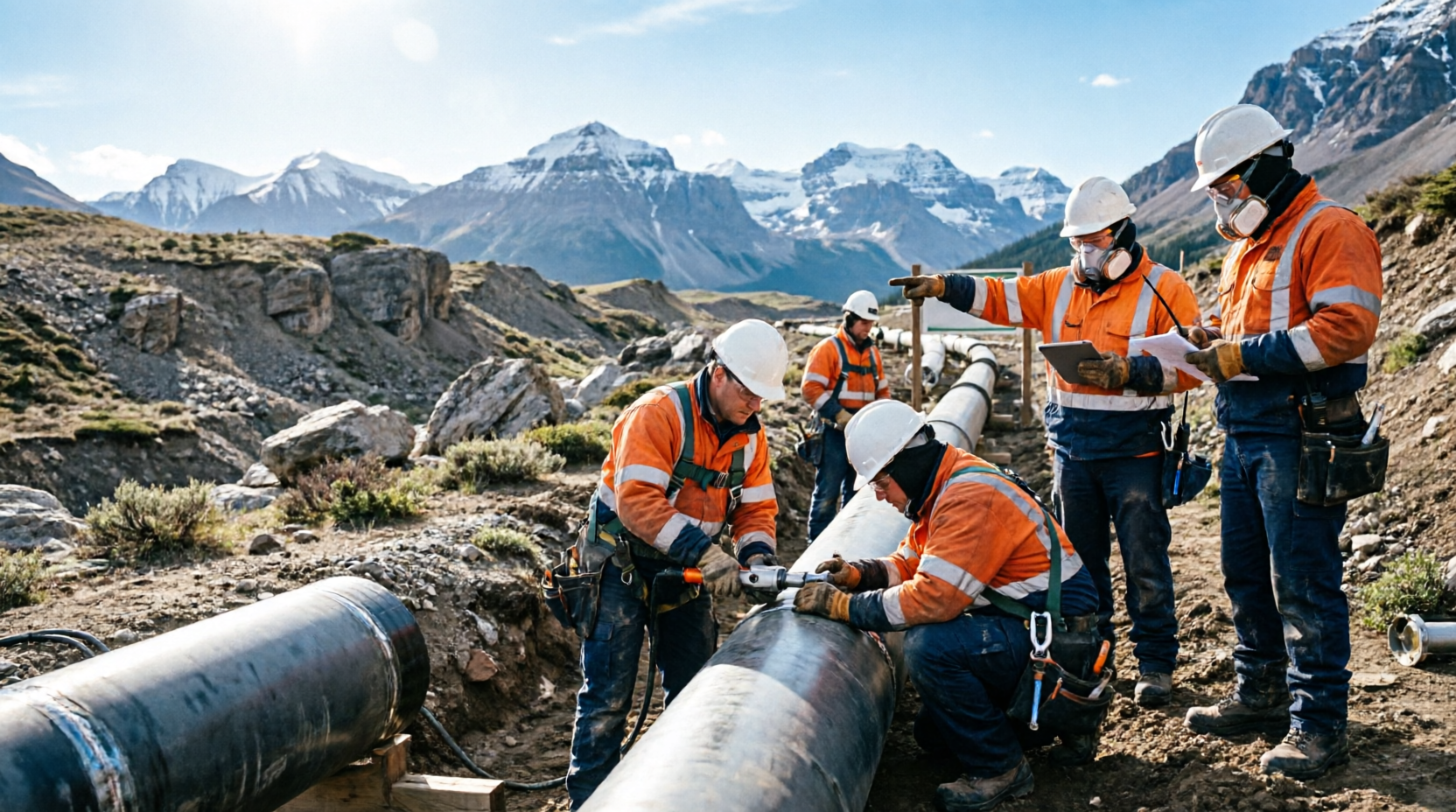
In a landmark demonstration of collaborative federalism, the federal government and the Province of Alberta have reached a comprehensive agreement to advance the modernized West Coast Pipeline Project. Announced jointly by Prime Minister Mark Carney and the Premier of Alberta, the initiative represents a new paradigm in Canadian energy development, balancing economic growth, energy security, and stringent environmental stewardship.
Advertisement
The agreement, finalized after months of constructive dialogue, ensures that the pipeline expansion will proceed with unprecedented levels of environmental protection and Indigenous participation. Unlike legacy energy projects, this iteration of the West Coast Pipeline is designed as a “next-generation” infrastructure asset. It incorporates state-of-the-art leak detection systems, double-walled piping in ecologically sensitive areas, and a mandatory integration of carbon capture and storage (CCS) technologies at key pumping facilities.
“Canada can be both an energy powerhouse and a global leader in climate action,” Prime Minister Carney stated during the joint press conference in Calgary. “This partnership with Alberta proves that we do not have to choose between economic prosperity and environmental responsibility. By working together, we are building an energy corridor that meets the highest standards of the 21st century.”
A cornerstone of the agreement is the formalization of Indigenous equity partnerships. Several First Nations and Métis communities along the proposed route have secured significant ownership stakes in the project. This model ensures that Indigenous communities are not merely consulted, but are active financial beneficiaries and decision-makers in the project’s lifecycle. This inclusive approach has been widely praised by Indigenous leadership organizations as a blueprint for future resource development in Canada.