

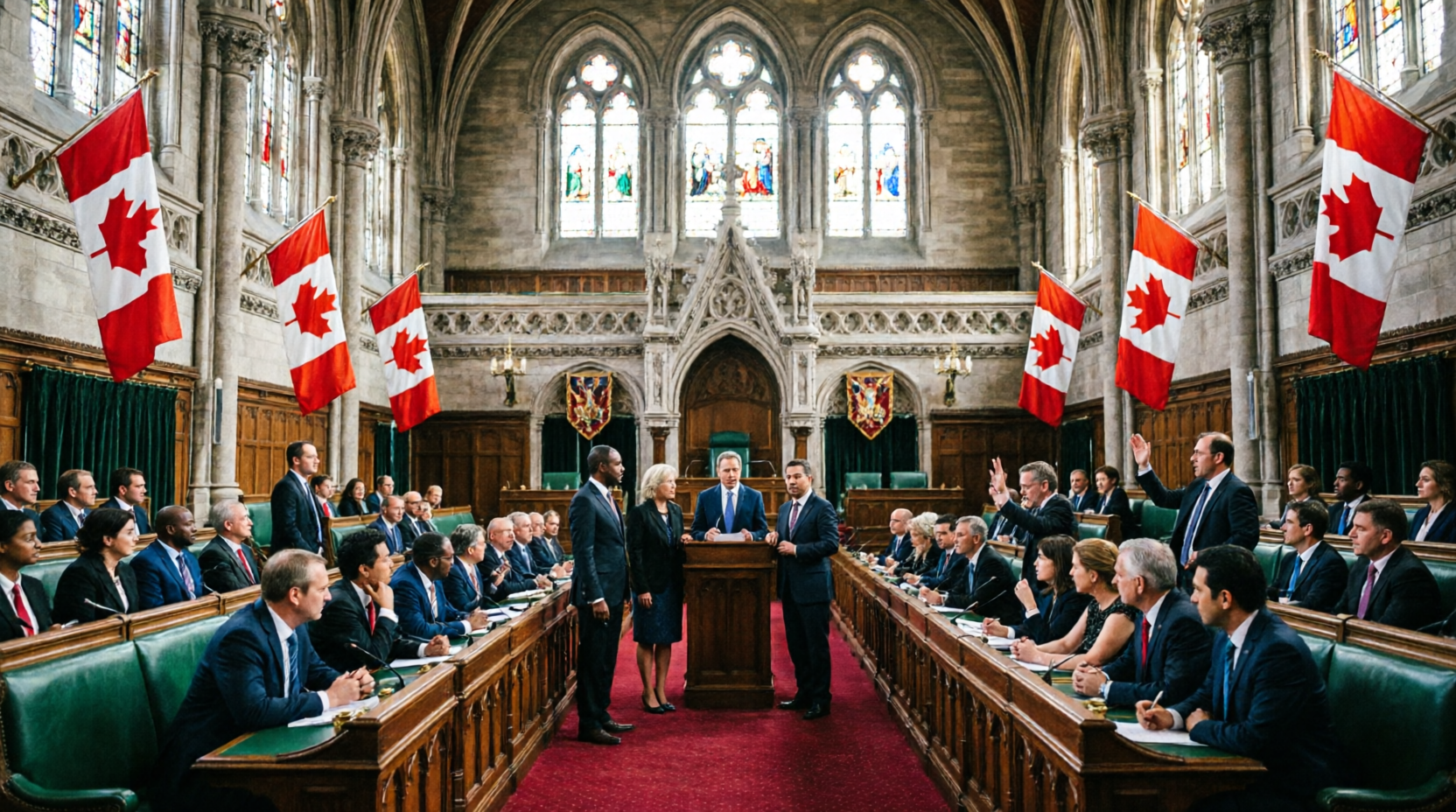
A fierce and multifaceted debate has erupted in the House of Commons as opposition parties launched a coordinated challenge against the federal government’s cornerstone climate policy, centering on the economic impact of the carbon pricing system and the pace of the national emissions reduction strategy. The debate, which spanned several days of heated Question Period and committee hearings, highlights the deep ideological and regional divides that continue to define Canadian environmental politics. Both the Conservative Party and the New Democratic Party have tabled distinct critiques of the government’s approach, albeit from fundamentally different philosophical and economic perspectives, placing the ruling Liberals in a complex political vise.
Advertisement
The Conservative Party’s challenge remains firmly rooted in economic populism and affordability. Party leadership has consistently argued that the escalating carbon tax places an undue burden on middle-class families, small businesses, and the agricultural sector, particularly in rural and resource-dependent regions. During the parliamentary debate, Conservative members presented economic analyses suggesting that the cumulative cost of the carbon price, combined with other regulatory burdens, is driving inflation and reducing the global competitiveness of Canadian industries. The opposition has renewed its calls to completely abolish the consumer carbon price, proposing instead a system of technology-neutral performance standards for large emitters. They argue that this alternative would achieve similar environmental outcomes without directly penalizing consumers at the gas pump or the grocery store, framing the issue as a matter of basic economic fairness and respect for taxpayers.
Conversely, the New Democratic Party has challenged the government’s climate policy from the opposite flank, arguing that it is insufficiently ambitious and fails to adequately protect vulnerable communities from the impacts of both climate change and the economic transition. NDP members have criticized the government for maintaining subsidies for the fossil fuel industry and for not imposing stricter, enforceable caps on industrial emissions. The party has introduced motions calling for a more aggressive “polluter pays” framework, increased federal investment in public transit and green infrastructure, and stronger protections for workers in transitioning industries. The NDP’s critique resonates strongly with environmental advocacy groups and younger voters, who view the current policy as a compromised half-measure that prioritizes corporate interests over ecological urgency.